We are so excited to share this work published by Dr. Monica Wojcik, Medical Director of the Manton Center (first author); and Dr. Anne O’Donnell-Luria, Manton Center Associate (senior author).
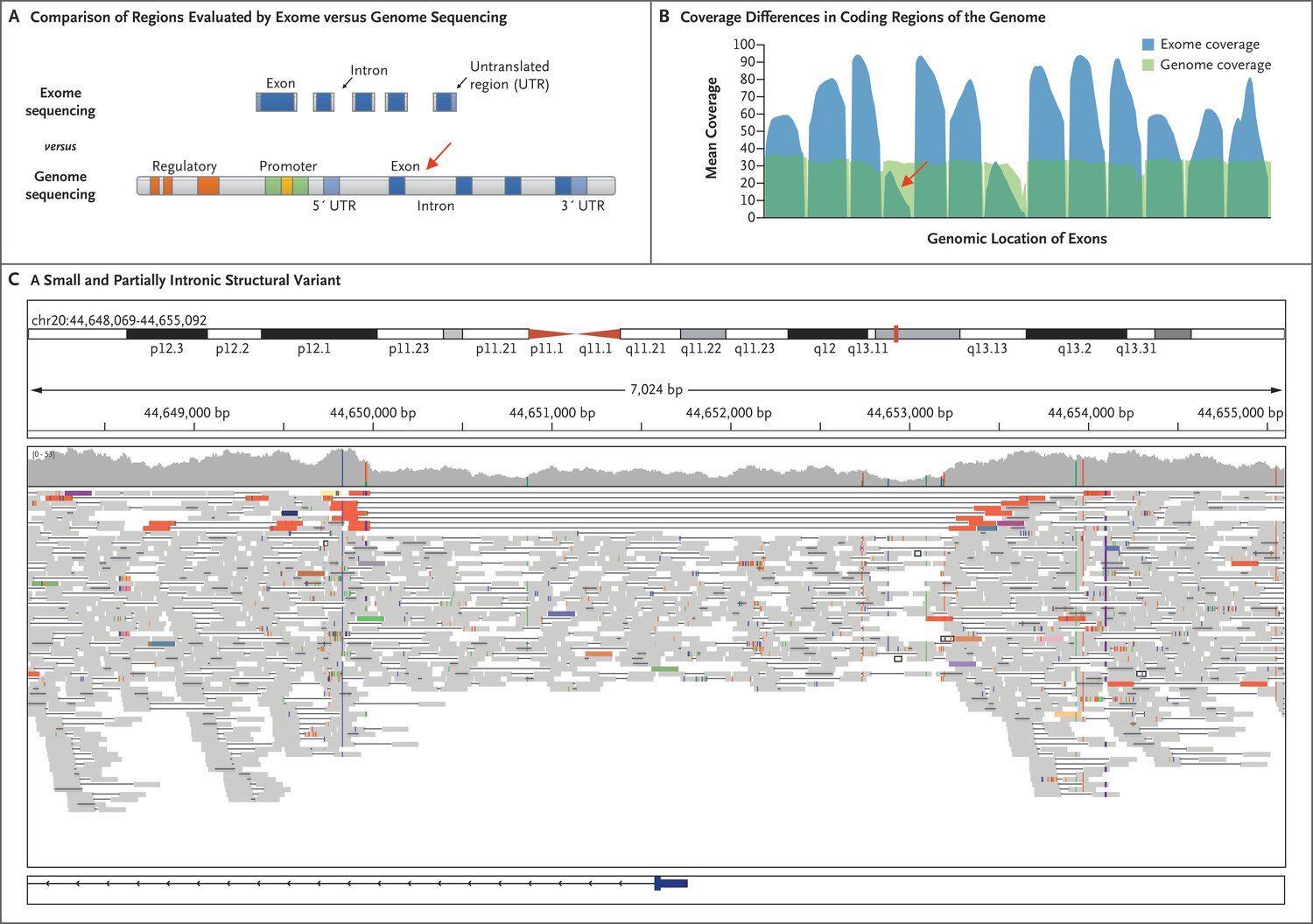
Dr. Wojcik and colleagues demonstrate that clinicians may turn to genome sequencing, which has many potential advantages for patients with rare diseases - including the ability to detect variants that exome sequencing cannot easily detect.
In this study of 744 families from across the Broad Center for Mendelian Genomics/GREGoR consortium cohort, including cases from the Manton Center and Beggs lab, 29% of cases received a diagnosis by genome sequencing, usually following prior negative exome sequencing. On careful review, 18% of diagnosed families would have been diagnosed by exome reanalysis and 3% by additional methods of copy number variant calling or mitochondrial variant evaluation on prior exome data. The remaining 8% required genome sequencing to identify small or copy-neutral structural variants; coding sequence variants in area of poor coverage; indels; noncoding variants; or tandem repeat expansions.
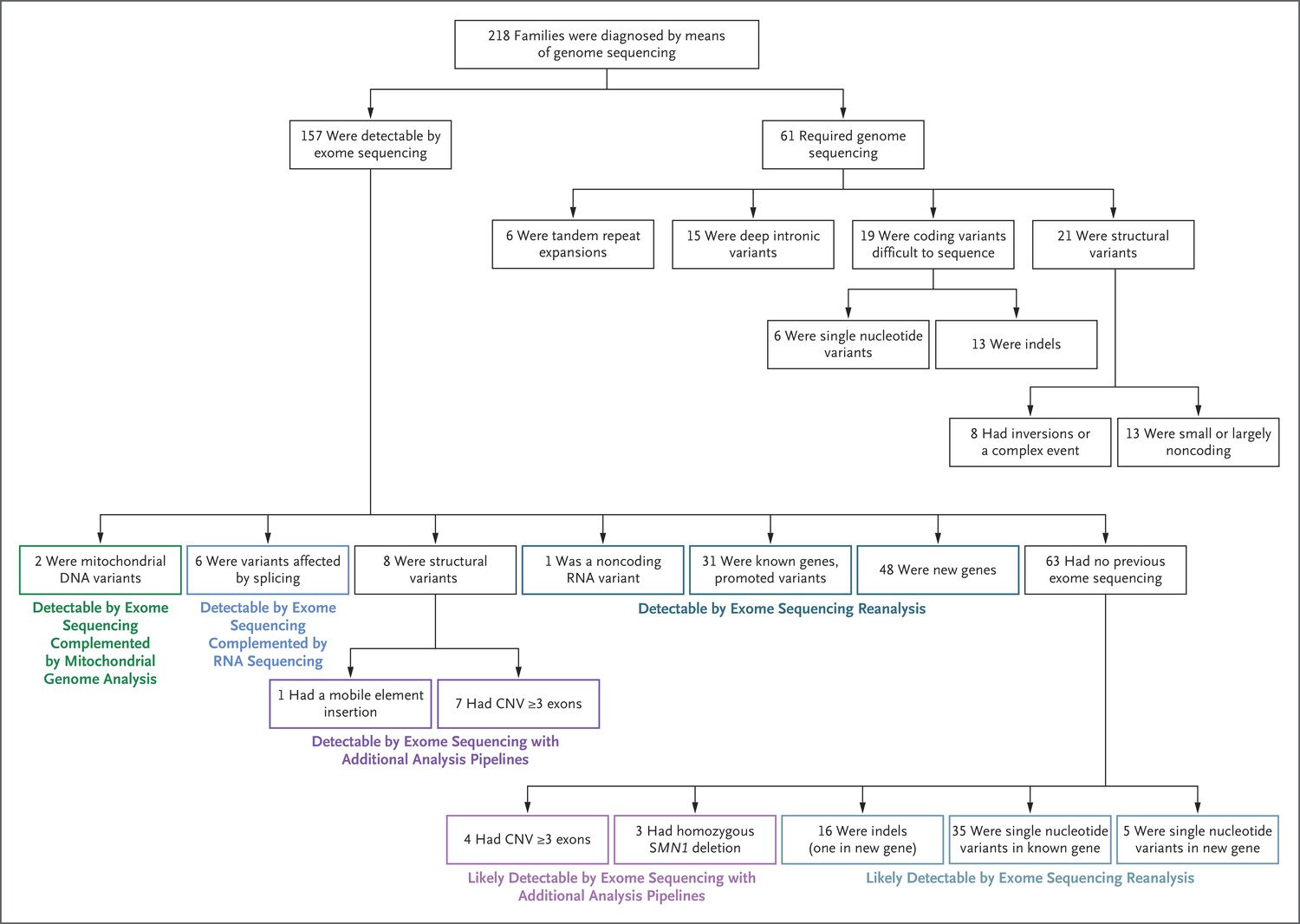
Above, the authors show which types of variants required genome sequencing for identification among this cohort of 218 families with a diagnosis made by genome sequencing.
This work highlights the benefits of pursuing genome sequencing after negative exome sequencing and analysis. Given the falling costs of sequencing and improved analysis available with genome sequencing, the study team proposes that the time has come for a genome sequencing first approach.
Read more about this study and findings in the New England Journal of Medicine.